






Benefits of Self-Cleaning Filters in Power Plant & Refinery Applications
Self-cleaning filtersplay a critical role in maintaining process reliability in power plants and refineries. These facilities operate under demanding conditions where water quality, particulate load, and system uptime directly affect production efficiency.
What Problem Do Self-Cleaning Filters Solve?
Power generation units and refinery processes often handle large volumes of cooling water, process water, and utility fluids. These streams commonly contain suspended solids such as sand, rust, organic matter, or scale.
Traditional filtration systems require frequent shutdowns for manual cleaning or cartridge replacement. When filtration becomes inconsistent, several issues arise:
• Heat exchangers and condensers lose efficiency
• Cooling systems experience a higher pressure drop
• Pumps, turbines, and downstream equipment face wear
• Maintenance teams spend excessive time on routine cleaning
• Energy consumption increases due to clogged filters
Self-cleaning filters address these issues by removing contaminants automatically without halting production.
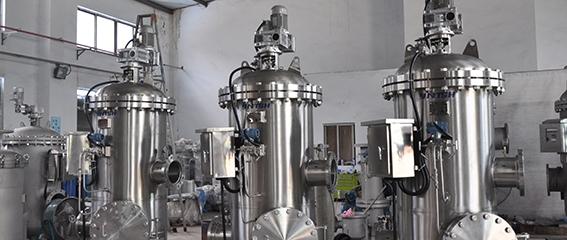
How Do Self-Cleaning Filters Work?
A self-cleaning filter uses an automatic backwash or mechanical cleaning mechanism. When particles accumulate, the system detects differential pressure and performs a cleaning cycle. The filter remains online during this process, ensuring continuous operation.
This design supports stable flow and consistent filtration accuracy—both essential for power plants and refineries.
Key Benefits of Self-Cleaning Filters in Power Plants
1. Higher Cooling System Efficiency
Power plants rely heavily on cooling water. When contaminants build up, cooling efficiency drops, potentially raising operating temperatures. A self-cleaning filter maintains the designed flow rate and prevents fouling of condensers, cooling towers, and heat exchangers.
2. Reduced Unplanned Downtime
Automated cleaning significantly reduces the risk of system shutdowns due to clogged filters. This supports stable power generation output and helps utility teams meet operational commitments.
3. Lower Maintenance Costs
Teams spend less time cleaning strainers or replacing filter elements. This allows maintenance budgets to focus on predictive and corrective tasks rather than repetitive manual work.
4. Extended Equipment Lifespan
Cleaner water reduces abrasion, scaling, and fouling. Pumps, valves, and high-value equipment benefit from reduced mechanical stress and longer service intervals.

Key Benefits for Refinery Applications
Refineries process complex fluids that must remain free of harmful particulates. Self-cleaning filters provide several advantages:
1. Stable Process Flow in Critical Units
Filtration stability improves reliability in desalters, cooling loops, wastewater treatment units, and heat exchange systems.
2. Improved Safety and Compliance
Consistent filtration helps reduce the risk of leaks, pressure spikes, and equipment failures—important factors for meeting environmental and safety standards.
3. Efficiency in High-Contaminant Streams
Many refinery fluids accumulate high particle loads. Self-cleaning filters handle these conditions without the frequent clogging typical of manual or disposable systems.
4. Lower Operating Costs
Automatic cleaning reduces labor needs, disposal costs for used cartridges, and operational interruptions.
How Engineers Evaluate Self-Cleaning Filter Performance
When selecting a system, engineers commonly review the following factors:
• Filtration rating and particle removal efficiency
• Flow capacity and allowable pressure drop
• Cleaning mechanism (backwash, scraper, suction-scanner)
• Material suitability for water, chemicals, or seawater
• Maintenance requirements and cleaning frequency
• Compatibility with existing pipelines and control systems
This structured evaluation ensures the filter aligns with process demands.
Self-cleaning filters offer reliable, continuous, and cost-effective filtration for power plants and refineries. By improving equipment protection, reducing downtime, and stabilizing process performance, they provide long-term operational value.
If you need a tailored solution for power generation or refinery applications, YUBO can provide engineering guidance, filtration analysis, and customized system designs.
Contact us
Email: info@yubofiltration.com
WhatsApp:86 13653285589