






How to Select the Right Pipeline Filter for Industrial Systems
How to Select the Right Pipeline Filter for Industrial Systems
Selecting the right pipeline filter for industrial systems requires evaluating fluid type, operating pressure, temperature, flow rate, and contaminant particle size. The correct filtration device removes suspended solids from process fluids and protects downstream equipment such as pumps, valves, and heat exchangers.
Common filtration devices used in industrial pipelines include Y-strainers (YGF), basket strainers (TGF), and high-flow pipeline filters (DGF), each designed for different operating conditions and contamination levels.
What Is a Pipeline Filter?
A pipeline filter is an inline filtration device installed in a pipeline to remove solid particles from liquids or gases. By capturing debris before it reaches sensitive equipment, pipeline filtration systems help maintain stable operation and reduce equipment wear.
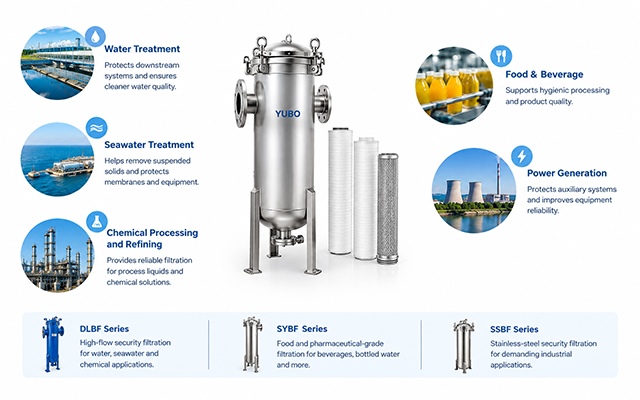
Pipeline filters are widely used in:
Chemical processing
Water treatment
Oil and gas systems
Power generation
Food and beverage production
Proper filtration prevents contamination from damaging pumps, valves, and heat exchangers.
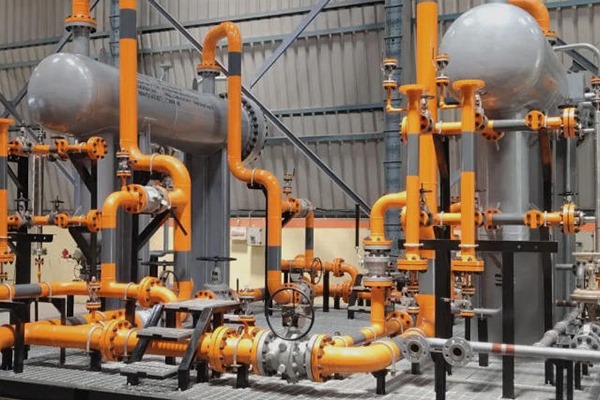
Key Factors When Selecting a Pipeline Filter
Selecting an industrial pipeline filter involves evaluating several operating conditions.
1. Fluid Type and Material Compatibility
The characteristics of the process fluid must be considered first. Pipeline filters may handle liquids, gases, or corrosive chemical solutions. In aggressive or high-temperature environments, stainless steel filter housings are commonly used for their corrosion resistance.
2. Filtration Precision (Micron Rating)
Filtration accuracy determines the particle size removed from the process fluid. Typical filtration ranges include:
| Filtration Level | Particle Size | Typical Purpose |
|---|---|---|
| Coarse filtration | 500–1000 μm | Pump and valve protection |
| Medium filtration | 100–500 μm | General pipeline filtration |
| Fine filtration | 10–100 μm | Sensitive equipment protection |
Selecting the correct micron rating ensures that harmful particles are removed before reaching downstream equipment.
3. Pressure, Temperature, and Flow Rate
Industrial pipeline filters must withstand the operating conditions of the system. Typical pressure ratings range from 150 LB to 2500 LB.
Engineers also consider:
Pipeline diameter
System flow rate (m³/h or GPM)
Allowable pressure drop
Proper sizing ensures efficient filtration without restricting pipeline flow.
4. Maintenance Requirements
Pipeline filters should allow easy cleaning or screen replacement to minimize downtime. Filters with removable baskets or screens simplify maintenance and improve long-term reliability.
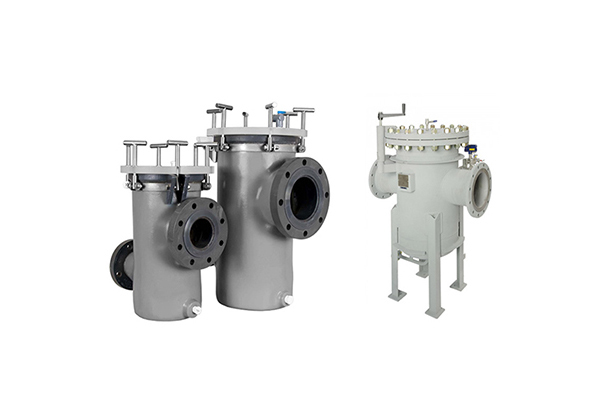
Comparison of Common Pipeline Filter Types
Industrial pipeline systems commonly use three main filtration devices: Y-strainers, basket filters, and T-type strainers. Each type is designed for specific operating conditions.
| Filter Type | Typical Applications | Key Advantages |
|---|---|---|
| YGF Y-Strainer | High-pressure pipelines and installations with limited space | Compact design, suitable for high-pressure systems with low contamination |
| TGF Basket Strainer | Cooling water systems and pipelines with heavy debris | Large debris capacity and easy cleaning |
| DGF High-Flow Filter | Smaller pipelines or systems with lower flow rates | Suitable for lower-capacity filtration applications |
Choosing the correct filter type depends on contamination level, installation space, and system flow conditions.
Selecting the right pipeline filter involves evaluating fluid properties, contaminant size, system pressure, temperature, and flow rate. Among the most widely used filtration devices are Y-strainers, basket filters, and T-type strainers, each suited to different industrial pipeline conditions.
A properly selected pipeline filtration system helps protect downstream equipment, maintain stable process performance, and reduce maintenance costs in industrial operations.
FAQ for How to Select the Right Pipeline Filter for Industrial Systems
1. What is the purpose of a pipeline filter?
Pipeline filters remove solid particles from fluids before they reach downstream equipment such as pumps and valves.
2. When should a Y-strainer be used?
Y-strainers are ideal for high-pressure pipelines with limited installation space and relatively low contamination levels.
More FAQs: Pipeline Filter&Strainer Common Questions Answered
For a complete guide, visit our Pipeline Filter Guide and Work Principle