






How to Select the Right Pipeline Filter – A Practical Industrial Guide
Why Choosing the Correct Pipeline Filter Matters
Industrial fluid systems often contain solid particles that can damage pumps, valves, heat exchangers, and metering instruments if allowed to enter downstream components.
A correctly selected pipeline filter:
Protects system components from wear and failure
Maintains stable flow and minimizes pressure loss
Reduces maintenance frequency and operational downtime
Understanding the differences between Y-type, T-type, and high-flow pipeline filters ensures equipment longevity and process reliability.
Pipeline Filter Types and Their Roles
Pipeline filters are installed inline and remove solid contaminants from liquids or gases. The choice depends on pipe size, flow rate, operating conditions, and contaminant characteristics.
For a complete guide, visit our Pipeline Filter Guide and Work Principle
Below are the three common pipeline filter series from YUBO:
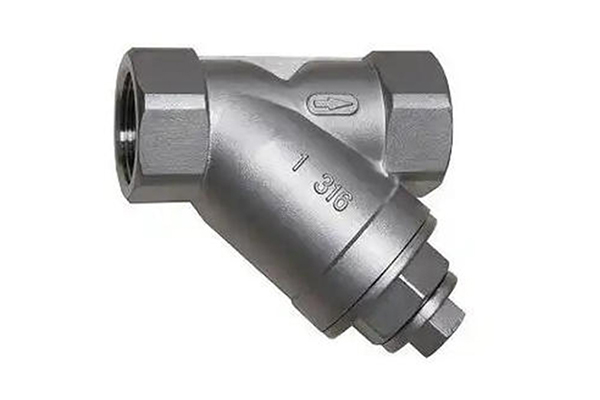
1. Y-Type Pipeline Filter (YGF)
The YGF series uses wire mesh cartridges to intercept particles ≥50 μm, protecting pumps, compressors, and instruments in general service pipelines.
• Working Pressure: 16 bar (or customized)
• Working Temperature: -30 to 200°C
• Filtration Accuracy Range: 50–1000 μm
• Suitable Pipeline Size: Up to DN250 (customized options available)
• Material: Stainless Steel or customized
2. TGF Basket Strainer
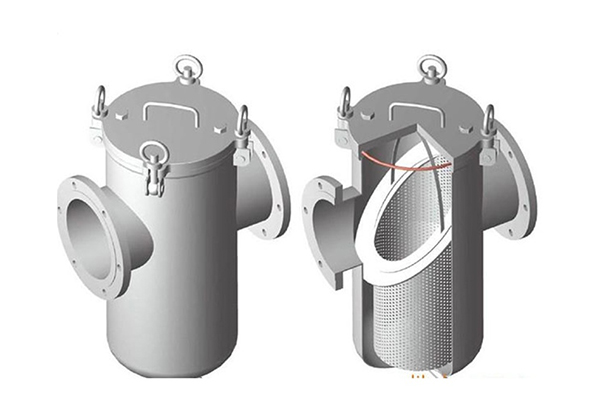
The TGF series is designed for industrial pipeline filtration where removable basket elements, easy cleaning, and higher contaminant-holding capacity are required.
• Working Pressure: 16 bar (or customized)
• Working Temperature: -30 to 200°C
• Filtration Accuracy Range: 50–1000 μm
• Suitable Pipeline Size: Up to DN600
• Filter Cartridge Types: Perforated, Wire Mesh, Wedge Wire
3. DGF High-Flow Pipeline Filter
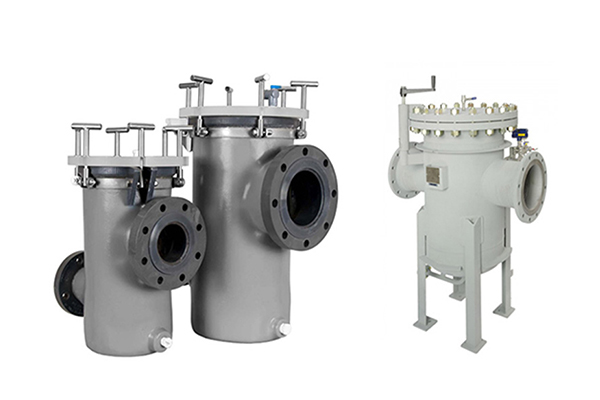
The DGF series uses wedge wire elements for very large pipeline applications. It is ideal for high flow rates and heavy debris environments.
• Working Pressure: 16 bar (or customized)
• Working Temperature: -30 to 200°C
• Filtration Accuracy Range: 50–3000 μm
• Suitable Pipeline Size: Larger than DN600
• Filter Element Type: Wedge Wire or customized
• Flow Capacity: Over 3000 m³/h
• Low Pressure Drop: Below 40 kPa
How These Filter Types Compare
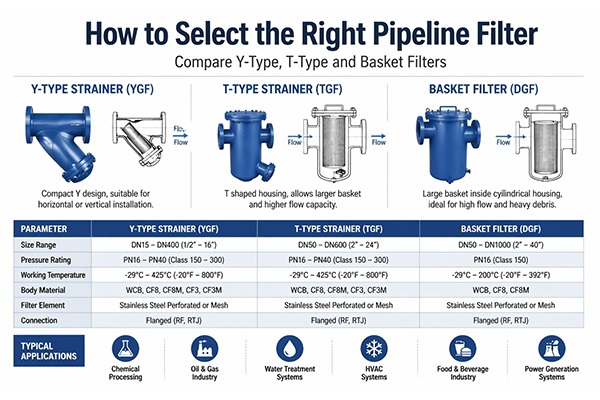
Key performance characteristics for these pipeline filters:
| Filter Type | Pipe Size Range | Pressure Rating | Temperature Range | Filtration Accuracy | Best For |
|---|---|---|---|---|---|
| Y‑Type (YGF) | DN25 – DN250 | 16 bar | -30–200°C | 50–1000 μm | General service pipelines |
| Basket Filter (TGF) | DN80 – DN600 | 16 bar | -30–200°C | 50–1000 μm | Larger pipelines, higher flows |
| High‑Flow (DGF) | DN700+ | 16 bar | -30–200°C | 50–3000 μm | Ultra high‑flow, heavy debris |
Notes:
YGF is optimized for compact pipelines with moderate flow.
TGF extends coverage to larger diameters and higher capacities.
DGF best suits large industrial trunk lines with high debris load.
Key Selection Considerations
• Flow Rate and Pipeline Size
Choose a filter that matches your system's flow capacity. Larger pipelines with high flow rates generally benefit from T‑Type or DGF series options.
• Filtration Accuracy
Define the maximum particle size you need to remove. For fine particle protection in sensitive systems, filters with finer mesh and adjustable cartridges are preferred.
• Operating Pressure and Temperature
Confirm that the selected filter’s design pressure and temperature comply with your system requirements.
• Material Compatibility
Stainless steel housings provide excellent corrosion resistance in chemical, oil & gas, and industrial water systems.
• Maintenance and Accessibility
Filters with removable cartridges or baskets allow easier cleaning and reduce downtime.
When to Use Each Pipeline Filter Type
1. Y-Type Filter
Best for general service lines with moderate flow and contamination levels. Ideal for protecting compressors, pumps, and instruments in systems such as industrial water, crude oil, and circulating water lines.
2. T-Type Filter
Preferred when pipeline diameters are larger and flow rates are higher. It balances ease of cleaning with higher capacity and is suitable for a broad range of industrial fluids.
3. High‑Flow (DGF)
Recommended for large industrial trunk lines, high debris load, and applications such as cooling water systems, large potable water lines, and pre‑filtration in reclaimed water systems.
Practical Pipeline Filter Selection Steps
• Assess System Requirements: Flow rate, operating pressures, and contaminants.
• Determine Pipe Diameter and Orientation: Choose YGF, TGF, or DGF according to size.
• Define Filtration Precision: Use micron ratings appropriate for your process.
• Select Materials: Choose based on fluid type and corrosion challenges.
• Evaluate Maintenance Needs: Prioritize accessible cartridge or basket design.
• Consult with Supplier: Verify specifications and customization options.
FAQ (Helpful Selection Insights)
Q1: Can these filters remove very fine particles?
A1: Filtration accuracy varies by element design. In the YGF and TGF series, accuracy ranges from 50–1000 μm; the DGF series can go up to 3000 μm for coarse debris applications.
Q2: Are these filters suitable for all fluids?
A2: Yes, stainless steel construction allows use with many industrial fluids, including water, oils, chemicals, and heat transfer liquids.
Q3: How often should filters be cleaned?
A3: Cleaning frequency depends on contamination level and flow conditions. Regular inspection and monitoring of pressure drop help determine service intervals.
In-depth Reading: Pipeline Filter Maintenance and Cleaning Guide
Selecting the right pipeline filter requires balancing flow capacity, pipeline size, filtration precision, pressure rating, and maintenance needs. The YGF, TGF, and DGF series offered by YUBO provide scalable solutions across a wide range of industrial applications.
A well‑chosen filter protects equipment, minimizes downtime, and enhances process reliability, making it an essential component of any industrial fluid system.