






Pipeline Filter Maintenance and Cleaning Guide | YUBO
Pipeline filters are designed to protect pumps, valves, heat exchangers, flow meters, and other critical equipment from rust, scale, sand, and process debris. However, even the best filtration system will lose efficiency if maintenance is neglected.
Regular inspection and cleaning help maintain stable flow, reduce pressure loss, extend equipment life, and prevent unplanned shutdowns.
For a complete guide, visit our Pipeline Filter Guide and Work Principles
Why Is Pipeline Filter Maintenance Important?
During normal operation, contaminants accumulate inside the filter screen or basket.
As debris builds up, operators may notice:
• Reduced flow rate
• Increased pressure drop
• Higher pump load
• Unstable system pressure
• More frequent equipment maintenance
If left unaddressed, excessive contamination can reduce filtration efficiency and increase the risk of equipment damage. Monitoring and maintenance help prevent these issues before they affect production.
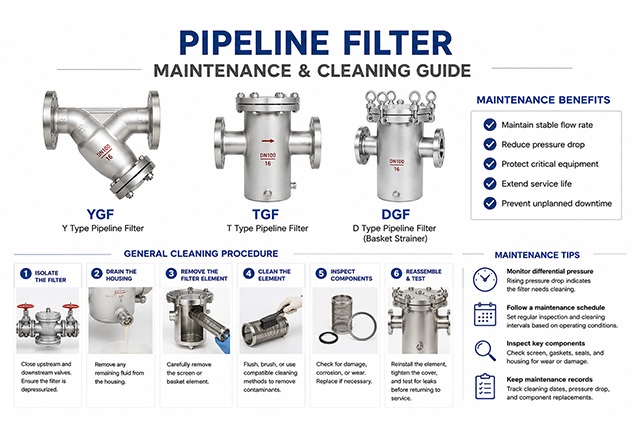
Signs That a Pipeline Filter Needs Cleaning
One of the most common maintenance mistakes is waiting until a system problem occurs before inspecting the filter.
Typical warning signs include:
1. Rising Differential Pressure
A gradual increase in pressure drop across the filter usually indicates that contaminants are accumulating on the screen or basket.
2. Reduced Flow Rate
Lower downstream flow often suggests that the filtration element is becoming blocked.
3. Increased Pump Energy Consumption
When filters become clogged, pumps must work harder to maintain system performance.
4. Frequent Equipment Alarms
Unexpected pressure fluctuations or equipment alarms may indicate a filtration restriction.
How Often Should a Pipeline Filter Be Cleaned?
According to YUBO Filtration engineers, there is no universal cleaning interval.
Maintenance frequency depends on:
• Contamination level
• Fluid type
• Flow rate
• Operating conditions
• Filter design
For new systems, inspections should be performed more frequently because construction debris and welding residue are often present during startup.
In established systems, differential pressure monitoring is usually the most reliable indicator of when cleaning is required.
General Pipeline Filter Cleaning Procedure
Before any maintenance activity, always follow site safety procedures and isolate the filtration system.
Step 1: Isolate the Filter
Close upstream and downstream valves and ensure the filter is fully depressurized.
Step 2: Drain the Housing
Remove any remaining fluid from the housing before opening the cover.
Step 3: Remove the Filter Element
Carefully remove the screen, basket, or straining element.
Step 4: Clean the Element
Depending on the application, cleaning may include:
• Water flushing
• Air blowing
• Soft brushing
• Compatible cleaning solutions
Avoid aggressive cleaning methods that may damage the screen mesh.
Step 5: Inspect Components
Check for:
• Screen damage
• Corrosion
• Deformation
• Worn seals
• Damaged gaskets
Replace damaged components before returning the filter to service.
Step 6: Reassemble and Test
Reinstall the cleaned element, tighten the cover correctly, and gradually restore system pressure while checking for leaks.
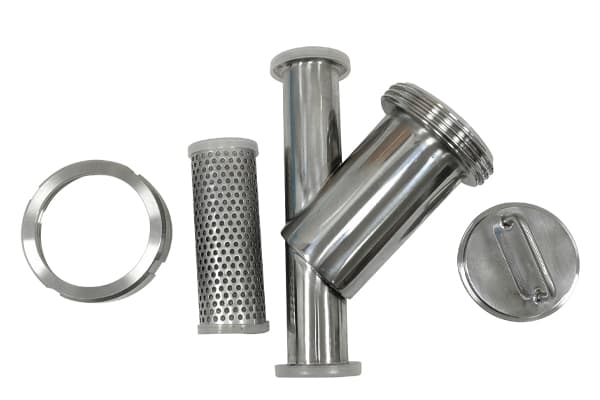
Maintenance Recommendations for YGF, TGF, and DGF Filters
1. YGF (Y Type Pipeline Filter)
YGF filters are commonly used in utility systems and smaller pipelines.
Recommended maintenance practices include:
• Routine pressure monitoring
• Periodic blowdown where applicable
• Regular screen inspection
• Prompt removal of accumulated debris
Because YGF filters typically have smaller filtration areas, they may require more frequent cleaning in dirty service conditions.
2. TGF (TGF Basket Strainer)
Maintenance priorities include:
basket removal
basket cleaning
basket mesh inspection
seal inspection
deformation/corrosion inspection
differential pressure monitoring
3. DGF (DGF High-Flow Pipeline Filters)
DGF filters are often selected for higher-flow industrial applications.
Routine maintenance typically includes:
wedge wire element inspection
flushing/cleaning
lower chamber drainage
pressure drop
large pipeline maintenance
Selecting the correct filter
→ Pipeline Filter Selection: A Practical Industrial Guide
Best Practices for Long-Term Reliability
The most effective maintenance programs focus on prevention rather than repair.
Recommended practices include:
| Best Practice | Benefit |
|---|---|
| Monitor differential pressure | Detect clogging early |
| Schedule routine inspections | Reduce unexpected downtime |
| Inspect screens and baskets regularly | Prevent equipment damage |
| Replace damaged seals promptly | Avoid leakage |
| Record maintenance activities | Improve maintenance planning |
| Use suitable filter materials | Improve service life |
A documented maintenance program helps operators identify trends and optimize cleaning intervals over time.
Frequently Asked Questions
1. What is the most reliable indicator that a pipeline filter needs cleaning?
Differential pressure across the filter is generally the most reliable maintenance indicator.
2. Can a clogged pipeline filter damage equipment?
Yes. Excessive clogging can increase pressure loss, reduce flow, and place additional load on pumps and other downstream equipment.
3. How often should filter screens be replaced?
Replacement depends on operating conditions and screen condition. Screens showing corrosion, deformation, or mesh damage should be replaced immediately.
4. Are DGF filters easier to clean than YGF filters?
In many applications, DGF filters allow easier basket removal and cleaning because of their larger access openings and basket-style construction.
More FAQs: Pipeline Filter&Strainer Common Questions Answered
Proper maintenance is essential for achieving reliable long-term performance from any pipeline filtration system.
By monitoring differential pressure, performing routine inspections, and cleaning filtration elements before excessive clogging occurs, operators can reduce downtime, improve equipment protection, and extend filter service life.
Whether using YGF, TGF, or DGF pipeline filters, a proactive maintenance program remains one of the most effective ways to improve overall system reliability.