






Pipeline Filter FAQ: Common Questions Answered
Pipeline filters and strainers are widely used in industrial systems to remove unwanted solids from liquids and protect pumps, valves, heat exchangers, flow meters, and other critical equipment.
This FAQ answers some of the most common questions engineers, maintenance teams, and purchasing professionals ask when selecting, operating, and maintaining pipeline filtration systems.
What Is a Pipeline Filter?
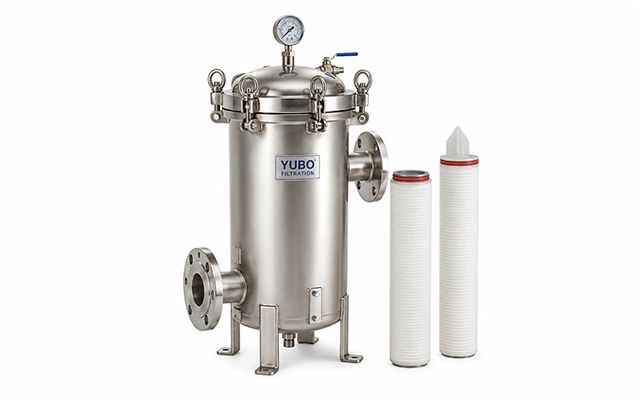
A pipeline filter is a mechanical filtration device installed directly in a piping system to remove solid particles from flowing liquids.
Its primary function is to protect downstream equipment from contamination and reduce the risk of wear, blockage, and process interruptions.
Pipeline filters are commonly used in water treatment, chemical processing, oil and gas facilities, food manufacturing, power generation, and many other industrial applications.
For a complete guide, visit our Pipeline Filter Guide and Work Principles

What Is the Difference Between a Pipeline Filter and a Strainer?
The terms "pipeline filter" and "pipeline strainer" are often used interchangeably in industrial applications.
In general, strainers are designed to remove larger particles through a perforated or mesh element, while fine filters may remove smaller contaminants using finer filtration media.
For most industrial pipeline protection applications, Y Type, T Type, and D Type units are commonly classified as strainers or pipeline filters depending on industry terminology.
More Reading: Pipeline Filter vs Basket Strainer
What Are the Main Types of Pipeline Filters?
The most common industrial pipeline filter designs include:
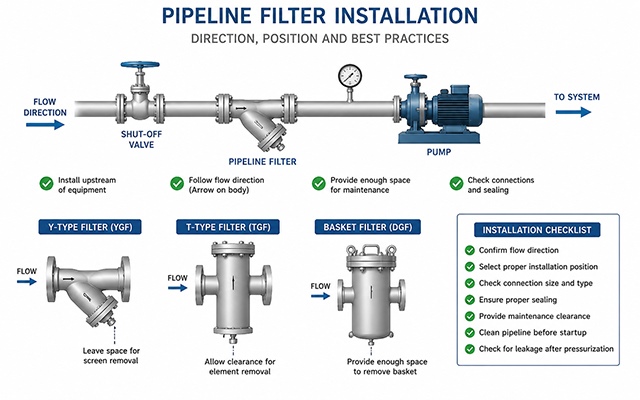
1. Y Type Pipeline Filter (YGF)
Y Type filters feature a compact body design and are often used in utility systems, smaller pipelines, and applications with limited installation space.
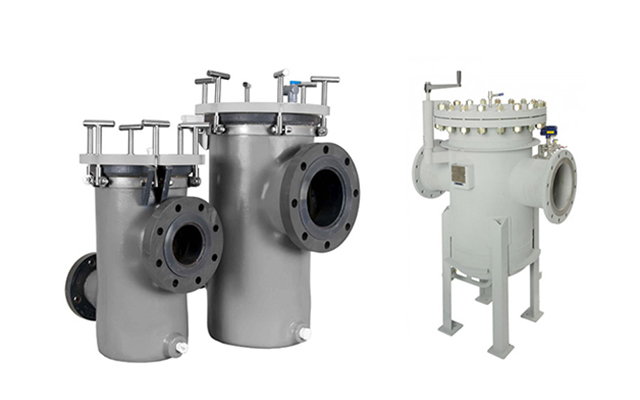
TGF basket strainers are designed for industrial pipeline filtration where removable baskets, easy cleaning, and higher contaminant-holding capacity are required.
3. High-Flow Pipeline Filter (DGF)
DGF high-flow pipeline filters use wedge wire elements and are designed for large pipelines and high flow rates.
How Do I Choose the Right Pipeline Filter?
The correct filter depends on several operating conditions:
Flow rate
Pipe size
Working pressure
Fluid characteristics
Contaminant concentration
Filtration accuracy requirements
Maintenance accessibility
Selecting a filter based only on pipe diameter is a common mistake. Flow conditions and contamination levels should also be evaluated.
What Mesh Size Should I Choose?
Mesh selection depends on the size of particles that need to be removed.
Typical industrial applications include:
| Application | Common Filtration Range |
| Coarse equipment protection | 20–40 mesh |
| General industrial service | 40–80 mesh |
| Fine protection applications | 80–200 mesh |
The ideal mesh size should balance filtration performance and pressure loss.
Using unnecessarily fine mesh may increase maintenance frequency and reduce system efficiency.
How Often Should a Pipeline Filter Be Cleaned?
There is no universal cleaning schedule.
Cleaning frequency depends on:
• Contamination level
• Fluid type
• Flow conditions
• Filtration accuracy
• Filter design
In most industrial systems, differential pressure monitoring is the most reliable indicator of when cleaning is required.
In-depth: Pipeline Filter Maintenance and Cleaning Guide
What Is Differential Pressure?
Differential pressure refers to the pressure difference measured between the inlet and outlet of a pipeline filter.
As contaminants accumulate on the filter element, resistance to flow increases and differential pressure rises.
A gradual increase in differential pressure is often the earliest indication that maintenance or cleaning is needed.
Can a Clogged Pipeline Filter Cause Equipment Problems?
Yes.
A heavily clogged filter can cause:
• Reduced flow rate
• Increased pump load
• Higher energy consumption
• Pressure instability
• Reduced process efficiency
Regular inspection and cleaning help prevent these issues.
In-depth Reading: Common Pipeline Filtration Problems and Solutions
Where Should a Pipeline Filter Be Installed?
Pipeline filters are typically installed upstream of equipment that requires protection.
Common installation locations include:
• Pump suction lines
• Control valve inlets
• Heat exchanger inlets
• Flow meter protection points
• Process equipment feed lines
The installation location should also allow sufficient space for maintenance and element removal.
In-depth Reading: Pipeline Filter Installation Guide
Are Pipeline Filters Used in Water Treatment Systems?
Yes.
Pipeline filters are widely used in:
• Municipal water treatment plants
• Industrial water systems
• Cooling water systems
• Desalination facilities
• Process water networks
Their primary purpose is to prevent suspended solids from reaching sensitive equipment.
Related Reading: Pipeline Filter Applications in Industrial Systems
Are Pipeline Filters Suitable for Chemical Processing?
Yes.
Chemical plants often use pipeline filters to remove catalyst fines, corrosion particles, crystallized solids, and process debris.
Proper filtration helps improve process stability and equipment reliability.
What Materials Are Commonly Used for Pipeline Filters?
Material selection depends on fluid compatibility and operating conditions.
Common materials include:
• Carbon Steel
• Stainless Steel 304
• Stainless Steel 316
• Duplex Stainless Steel
Corrosion resistance, operating temperature, and process requirements should be considered during material selection.
Related Reading: SS304 vs SS316L vs Duplex Material
How Long Does a Pipeline Filter Last?
Service life varies depending on:
Material quality
Operating environment
Corrosion conditions
Maintenance practices
Cleaning frequency
With proper maintenance, industrial pipeline filter housings can remain in service for many years.
The filtration element should be inspected regularly and replaced if damaged.
Which Pipeline Filter Is Best for High-Flow Applications?
TGF basket strainers are commonly selected for high-flow applications because they offer larger flow passages and relatively low pressure loss.
For systems with high contaminant loads, D Type Pipeline Filters (DGF) may also be suitable due to their larger filtration area.
What Is the Most Important Maintenance Practice?
The most effective maintenance practice is regular monitoring of differential pressure combined with routine inspection of the filter element.
This approach helps identify clogging before it causes operational problems.
Pipeline filters play an important role in protecting industrial equipment and maintaining stable process performance.
Understanding filter types, sizing considerations, mesh selection, maintenance requirements, and application requirements helps operators achieve better reliability and lower operating costs.
Whether selecting a YGF, TGF, or DGF pipeline filter, a clear understanding of system requirements remains the foundation of effective filtration.