






Pipeline Filter Applications in Industrial Systems
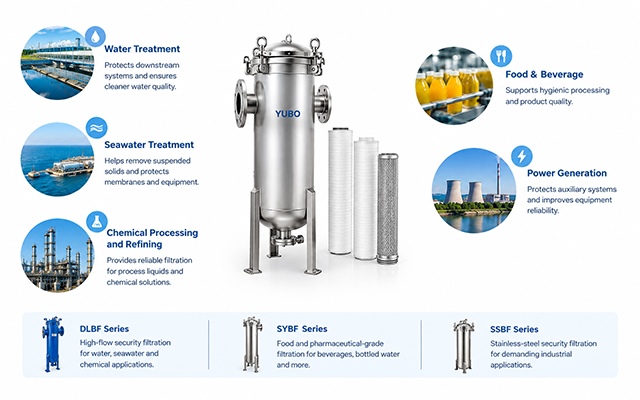
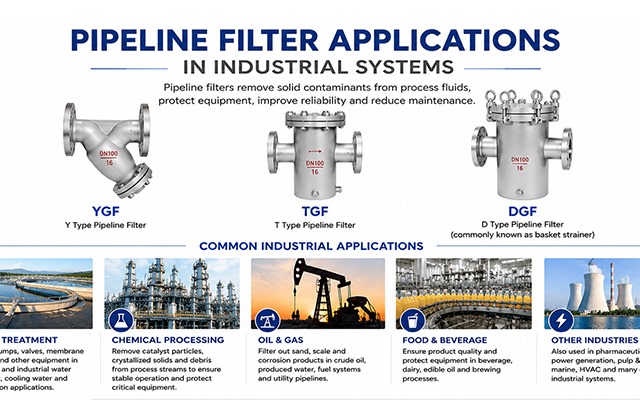
Industrial pipeline filters are widely used in water treatment, chemical processing, oil and gas facilities, and food manufacturing plants.
Their primary purpose is to remove solid contaminants from process fluids before those particles can damage pumps, valves, heat exchangers, flow meters, and other critical equipment.
This article explores the most common industrial applications of pipeline filters and explains how Y Type (YGF), T Type (TGF), and D Type (DGF) pipeline filters are used in different operating environments.
For a complete guide, visit our Pipeline Filter Guide and Work Principle
Why Are Pipeline Filters Important?
Most industrial fluids contain some level of contamination, including:
• Rust particles
• Welding slag
• Sand and sediment
• Scale deposits
• Process debris
• Catalyst fines
Without proper filtration, these contaminants can cause:
• Equipment wear
• Reduced process efficiency
• Valve blockage
• Heat exchanger fouling
• Increased maintenance costs
• Unexpected downtime
Installing a pipeline filter before critical equipment helps improve system reliability while reducing operational risks.
Pipeline Filters in Water Treatment Systems
Water treatment is one of the largest application areas for pipeline filters.
Raw water often contains suspended solids, sand, corrosion particles, and other contaminants that can affect downstream equipment and treatment performance.
Common Applications
• Municipal water treatment plants
• Industrial water treatment systems
• Cooling water circulation systems
• Desalination facilities
• Process water pipelines
Equipment Protection
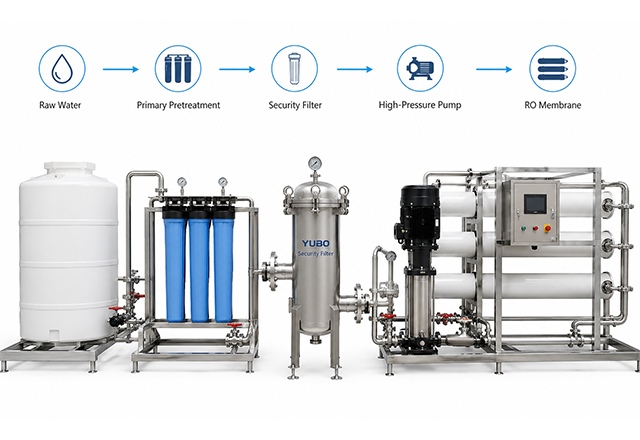
Pipeline filters are commonly installed upstream of:
• Pumps
• Control valves
• Flow meters
• Membrane systems
• Heat exchangers
Recommended Filter Types
1. Y Type Pipeline Filters (YGF) are often used in smaller utility pipelines where compact installation is important.
2. TGF Basket Strainers are commonly selected for cooling water and process water systems because they provide a larger filtration area and higher dirt-holding capacity.
Pipeline Filters in Chemical Processing Plants
Chemical production processes frequently involve fluids that contain catalyst particles, crystallized solids, corrosion products, or raw material residues.
These contaminants can interfere with process equipment and reduce production efficiency.
Common Applications
• Chemical feed systems
• Reactor circulation loops
• Solvent transfer lines
• Utility water systems
• Intermediate product pipelines
Benefits
• Protect pumps and valves
• Reduce equipment wear
• Improve process stability
• Lower maintenance frequency
Recommended Filter Types
1. TGF Basket Strainers (TGF) are commonly used in larger process lines where high flow rates and low pressure loss are important.
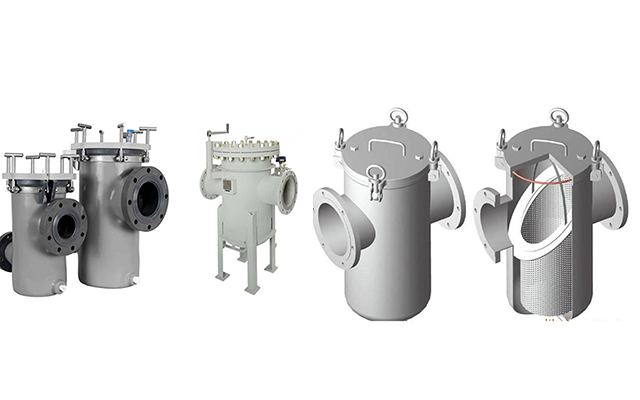
2. DGF High-Flow Pipeline Filters (DGF) are often preferred when systems contain higher levels of suspended solids.
Pipeline Filters in Oil and Gas Operations
Oil and gas facilities operate under demanding conditions where reliability is critical.
Process fluids may contain sand, scale, corrosion products, and other particles that can damage equipment if not removed.
Common Applications
• Crude oil transfer lines
• Produced water systems
• Utility water networks
• Fuel handling systems
• Pump protection systems
Benefits
• Reduce equipment wear
• Protect flow measurement devices
• Improve operational reliability
• Minimize unplanned shutdowns
Recommended Filter Types
1. TGF Basket Strainers (TGF) are widely used in high-flow industrial systems because their design helps minimize pressure loss.
2. DGF High-Flow Pipeline Filters (DGF) are commonly installed ahead of pumps and other critical equipment where higher dirt-loading capacity is required.
Pipeline Filters in Food and Beverage Production
Food and beverage manufacturers require reliable filtration to maintain product quality and protect processing equipment.
Pipeline filters help remove unwanted particles from liquids during transfer and production operations.
Common Applications
• Beverage production
• Dairy processing
• Syrup transfer systems
• Edible oil production
• Brewing operations
Benefits
• Improve product consistency
• Reduce contamination risks
• Protect downstream equipment
• Support stable production processes
Recommended Filter Types
1. DGF High-Flow Pipeline Filters (DGF) are commonly used because they provide a larger filtration area and can handle higher contaminant loads.
2. For hygienic applications, stainless steel construction is often preferred due to its corrosion resistance and ease of cleaning.
Choosing Between YGF, TGF, and DGF Pipeline Filters
The best pipeline filter depends on flow conditions, contamination levels, installation space, and maintenance requirements.
| Filter Type | Best Application | Main Advantage |
|---|---|---|
| YGF | Smaller pipelines / general service | Compact design |
| TGF Basket Strainers | Higher contaminant loads / easy cleaning | Large debris capacity |
| DGF High-Flow Pipeline Filters | Large pipelines / very high flow | High flow capacity |
General Selection Guidelines
Choose YGF when installation space is limited and contamination levels are relatively low.
Choose TGF when handling large flow rates and minimizing pressure drop is a priority.
Choose DGF when longer cleaning intervals and higher dirt-holding capacity are required.
For a detailed selection process, refer to our Pipeline Filter Selection Guide.
Frequently Asked Questions
1. Which industries use pipeline filters most frequently?
Water treatment, chemical processing, oil and gas production, food manufacturing, and many other industrial sectors rely on pipeline filtration to protect equipment and maintain process stability.
2. Which pipeline filter is best for high-flow systems?
TGF Basket Strainers are commonly used in high-flow applications because they provide lower pressure loss than many compact filter designs.
3. When should a D Type Pipeline Filter be used?
DGF High-Flow Pipeline Filters are often selected when systems contain higher levels of solid contaminants or require longer maintenance intervals.
4. Why are pipeline filters installed before pumps?
Pipeline filters help prevent particles from entering pumps, reducing wear, blockage, and equipment damage.
More FAQs: Pipeline Filter&Strainer Common Questions Answered
Pipeline filters play a critical role in protecting industrial fluid systems across a wide range of industries.
Whether used in water treatment, chemical processing, oil and gas operations, or food production, effective filtration helps reduce equipment wear, improve process reliability, and lower maintenance costs.
By understanding the requirements of each application, engineers can select the most suitable YGF, TGF, or DGF pipeline filter to achieve reliable long-term system performance.