






Filter Housing Materials: SS304 vs SS316L vs Duplex
Selecting the correct filter housing material directly affects corrosion resistance, pressure performance, service life, and total lifecycle cost. Among stainless steels, SS304, SS316L, and Duplex (commonly 2205) are the most frequently specified materials for industrial filter housing applications.
Why Does Filter Housing Material Selection Matter?
A filter housing operates under:
• Internal pressure
• Continuous fluid contact
• Chemical exposure
• Temperature fluctuation
• Possible chloride attack
Improper material selection may lead to:
• Pitting corrosion
• Stress corrosion cracking
• Premature weld failure
• Reduced pressure safety margin
• Increased maintenance cost
Material choice should be based on chemical compatibility, chloride concentration, temperature, pressure rating, and regulatory requirements.
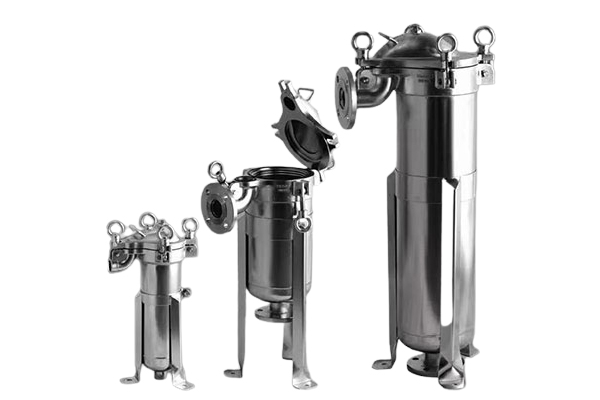
What Is SS304 Stainless Steel?
SS304 (AISI 304, EN 1.4301) is an austenitic stainless steel containing approximately 18% chromium and 8% nickel.
Key Properties of SS304
• Good general corrosion resistance
• Excellent formability and weldability
• Suitable for low-chloride environments
• Cost-effective compared to 316L and Duplex
• Widely used in food and beverage filtration
When Is SS304 Suitable for Filter Housing?
SS304 is typically appropriate for:
• Municipal water filtration
• Food processing liquids
• Low-chloride industrial fluids
• Indoor installations with controlled environments
When Should SS304 Be Avoided?
• Seawater filtration
• High chloride concentration (>200 ppm typical risk range)
• Acidic chemical processing
• Offshore applications
SS304 has limited resistance to pitting corrosion in chloride-rich environments.
What Is SS316L Stainless Steel?
SS316L (AISI 316L, EN 1.4404) is an austenitic stainless steel containing chromium, nickel, and approximately 2–3% molybdenum. The "L" indicates low carbon content, which improves weld corrosion resistance.
Key Properties of SS316L
• Improved chloride corrosion resistance
• Better pitting resistance than 304
• Low carbon reduces intergranular corrosion
• Commonly used in pharmaceutical and chemical industries
• Marine-grade classification in moderate exposure
Why Does 316L Resist Chlorides Better?
The added molybdenum increases the material’s Pitting Resistance Equivalent Number (PREN), enhancing resistance to localized corrosion.
Typical Applications
• Chemical processing filter housing
• Pharmaceutical filtration systems
• Marine atmosphere installations
• Mild seawater exposure
• Higher hygiene requirements
What Is Duplex Stainless Steel (2205)?
Duplex 2205 (UNS S32205, EN 1.4462) is a dual-phase stainless steel containing both austenitic and ferritic microstructures.
Key Advantages of Duplex 2205
• Nearly double the yield strength of 304 and 316L
• Superior chloride pitting resistance
• High resistance to stress corrosion cracking
• Better performance in high-pressure systems
• Improved fatigue resistance
PREN Comparison (Typical Ranges)
• SS304: ~18–20
• SS316L: ~23–28
• Duplex 2205: ~34–38
Higher PREN indicates stronger resistance to pitting in chloride environments.
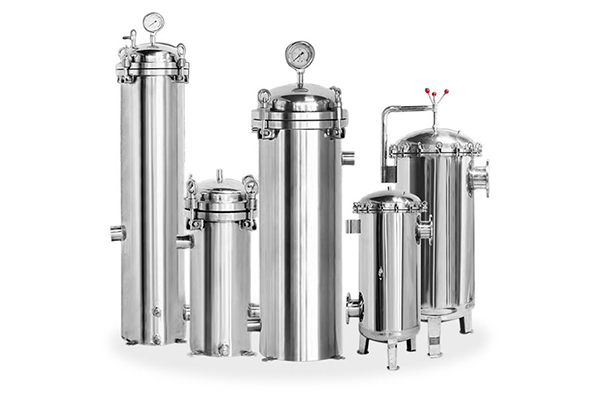
SS304 vs SS316L vs Duplex: Direct Comparison
| Property | SS304 | SS316L | Duplex 2205 |
|---|---|---|---|
| Corrosion Resistance | Moderate | High | Very High |
| Chloride Resistance | Limited | Good | Excellent |
| Yield Strength | Standard | Standard | ~2x Higher |
| Stress Corrosion Cracking | Moderate Risk | Improved | Very Resistant |
| Cost | Lowest | Medium | Highest (initial) |
| Typical Use | Water, food | Chemical, marine | Offshore, seawater |
Which Stainless Steel Is Best for Filter Housing?
There is no universal best material. The correct choice depends on operating conditions.
Choose SS304 if:
• Chloride levels are low
• Budget is primary concern
• Application is non-corrosive
Choose SS316L if:
• Moderate chloride exposure exists
• Chemical compatibility is required
• Pharmaceutical or hygienic compliance is needed
Choose Duplex 2205 if:
• High chloride or seawater exposure
• Offshore oil & gas
• High pressure filtration systems
• Long service life is critical
How Does Material Selection Affect Cost?
Initial material cost increases from 304 → 316L → Duplex.
However, lifecycle cost may decrease with higher-grade materials due to:
• Reduced maintenance
• Fewer corrosion failures
• Longer inspection intervals
• Improved pressure safety margins
In aggressive environments, upgrading to Duplex may reduce long-term operational risk.
Industry Applications
✔ Water Treatment
304 for municipal water
316L for brackish water
Duplex for seawater desalination
✔ Oil & Gas
316L for moderate corrosion
Duplex for offshore and subsea filtration
✔ Chemical Processing
316L for general chemicals
Duplex for aggressive chlorides
✔ Pharmaceutical
316L preferred for hygiene and weld integrity
Engineering Considerations Before Final Selection
Before finalizing material, verify:
• Chloride concentration (ppm)
• Operating temperature
• Internal pressure rating
• Fluid chemical composition
• Applicable standards (ASME, ASTM, EN)
• Welding procedures and post-treatment
Material certification and compliance documentation should always be reviewed before procurement.
Frequently Asked Questions
1. Is SS304 suitable for seawater filtration?
No. SS304 is generally not recommended for direct seawater exposure due to high chloride-induced pitting risk.
2. Is SS316L enough for offshore applications?
In mild marine environments, 316L may perform adequately. For direct seawater contact or offshore platforms, Duplex 2205 is typically preferred.
3. Why is Duplex stronger than 316L?
Duplex has a mixed microstructure (austenite + ferrite), which increases yield strength and improves resistance to stress corrosion cracking.
4. Does 316L always replace 304?
Not necessarily. If chloride levels are low and corrosion risk is minimal, 304 remains a cost-effective solution.
SS304, SS316L, and Duplex 2205 each serve specific roles in industrial filtration systems.
SS304 offers economical performance for low-corrosion environments.
SS316L provides improved chloride resistance and hygienic reliability.
Duplex 2205 delivers superior strength and corrosion resistance for aggressive and high-pressure conditions.
Proper selection ensures operational safety, regulatory compliance, and long-term cost efficiency.