






How to Specify a Custom Industrial Filter Housing
A custom industrial filter housing should match the process conditions, filtration requirements and installation space of the application. Before requesting a quotation, buyers should provide information about the process fluid, flow rate, pressure, temperature, housing material, filter configuration and pipeline connections.
These details help the manufacturer assess the required configuration and identify potential issues before production. The following points explain what to prepare for a custom filter housing inquiry.
1. Describe the Application and Process Fluid
Start with the purpose of the filtration system and the fluid being filtered.
Important details include:
• Application: Water treatment, chemical processing, oil filtration or another industrial process.
• Process fluid: Fluid name and, where relevant, its chemical composition or concentration.
• Filtration purpose: Equipment protection, suspended particle removal or product clarification.
• Required filtration rating: Target micron rating, if already specified.
Fluid composition matters because it affects the compatibility of the housing material, filter elements, and sealing components. For chemical or chloride-containing fluids, the actual concentration and operating temperature should also be considered.
2. Provide Flow Rate, Pressure and Temperature
These operating conditions help determine the housing configuration and its required specifications.
| Parameter | Information to Provide |
| Flow rate | Required flow rate, unit and normal or maximum operating demand |
| Operating pressure | Normal working pressure and expected fluctuations |
| Design pressure | Required pressure for the housing design |
| Operating temperature | Normal and maximum process temperature |
Operating pressure and design pressure are not interchangeable. Operating pressure describes the pressure during normal service, while design pressure is a separate engineering requirement used for the pressure design of the equipment.
Flow rate also affects the filter configuration, including the required filtration area and number of elements. The final arrangement should be confirmed against the actual process requirements rather than selected from flow rate alone.
3. Select a Suitable Housing Material
Material selection depends on the process fluid, chemical concentration, temperature and operating environment.
Common stainless steel options include:
• SS304: Commonly used in general industrial applications where its corrosion resistance is adequate.
• SS316L: Often considered where improved resistance to certain corrosive media is required compared with SS304.
• Duplex stainless steel: May be considered when higher material strength or improved resistance to specific corrosion conditions is needed.
No material is suitable for every application. Direct seawater exposure, chloride-containing fluids and aggressive chemicals require careful compatibility evaluation.
For a closer comparison, see Filter Housing Materials: SS304 vs SS316L vs Duplex.
4. Confirm the Housing Type and Filter Configuration
The housing structure should match the filtration method, required capacity and maintenance arrangement.
Common configurations include:
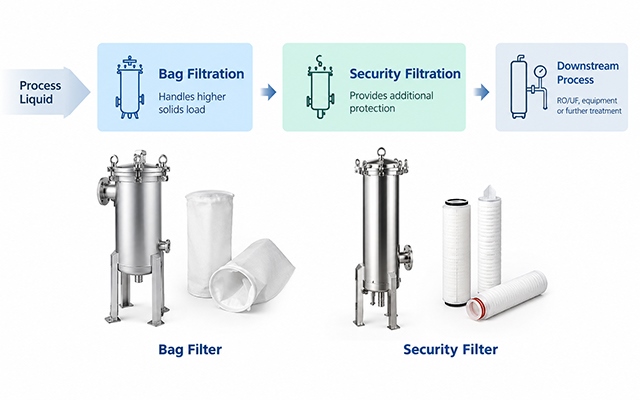
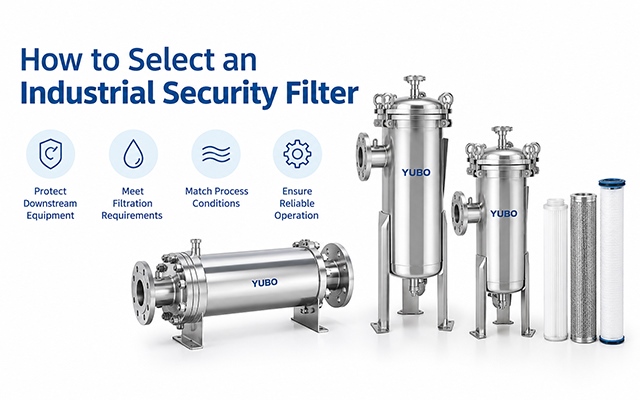
• Cartridge filter housing: Uses replaceable filter cartridges and can be configured for single or multiple elements.
• Bag filter housing: Uses replaceable filter bags for industrial liquid filtration.
• Other specified configurations: Depending on the process, the project may require a particular internal structure or existing equipment interface.
If the filter elements have already been selected, provide their type, dimensions and quantity. For replacement projects, existing equipment drawings, nameplate information and clear photographs can help the manufacturer understand the original arrangement.
5. Specify Connections and Installation Conditions
A housing that meets the process requirements must also fit the existing pipeline and installation space.
Confirm the following details:
• Inlet and outlet sizes
• Connection type, such as flanged or threaded
• Applicable flange standard and rating, where required
• Vertical or horizontal installation
• Pipeline orientation and available space
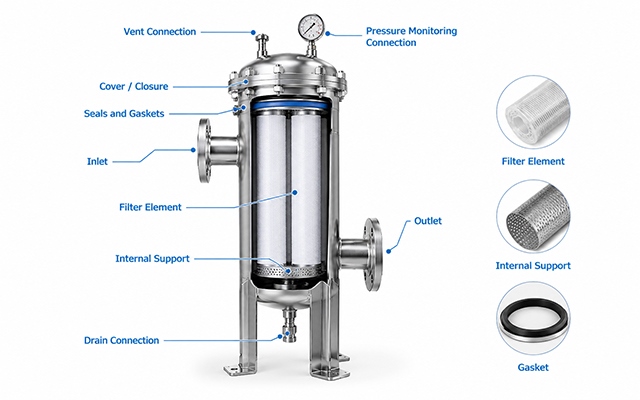
• Required drain, vent or pressure gauge connections
For replacement equipment, do not provide only the nominal pipeline size. Connection dimensions, flange details and equipment drawings are more useful for checking compatibility.
6. Confirm Seals and Other Special Requirements
Gasket materials should be compatible with the process fluid and operating temperature. EPDM, NBR and FKM (Viton) are common options, but the correct choice depends on the actual service conditions.
Also specify any additional requirements, such as:
• Housing surface finish
• Cover opening arrangement
• Drain and vent connections
• Maintenance access
Required inspection documents or material certificates
These details are best confirmed before the quotation is finalized.
7. Custom Filter Housing RFQ Checklist
Use the following checklist when preparing an inquiry:
| Information | Details to Provide |
| Application and fluid | Process purpose, fluid name and composition |
| Flow rate | Required capacity and unit |
| Pressure | Operating pressure and design pressure |
| Temperature | Normal and maximum temperature |
| Material | SS304, SS316L, Duplex or specified grade |
| Housing type | Cartridge, bag or other configuration |
| Filter elements | Type, dimensions and quantity |
| Connections | Inlet/outlet size and connection details |
| Installation | Orientation, available space and pipeline layout |
| Special requirements | Seals, finish, accessories and documents |
Not all information needs to be finalized before the first inquiry. If some parameters are unavailable, submit the data you have and identify the items that still need confirmation.
Custom Industrial Filter Housings from YUBO
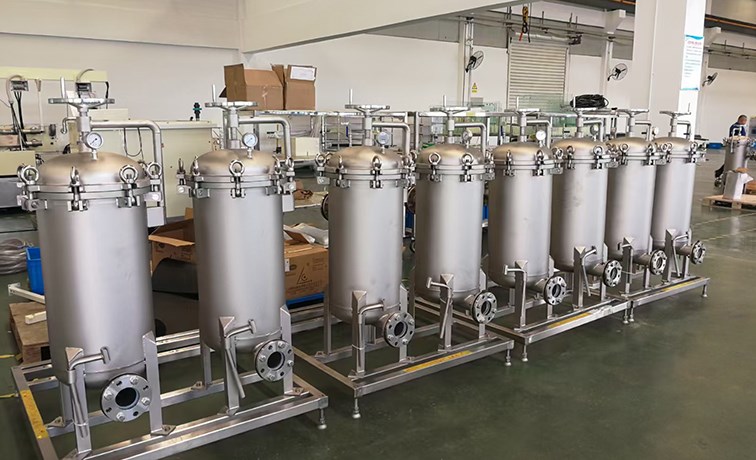
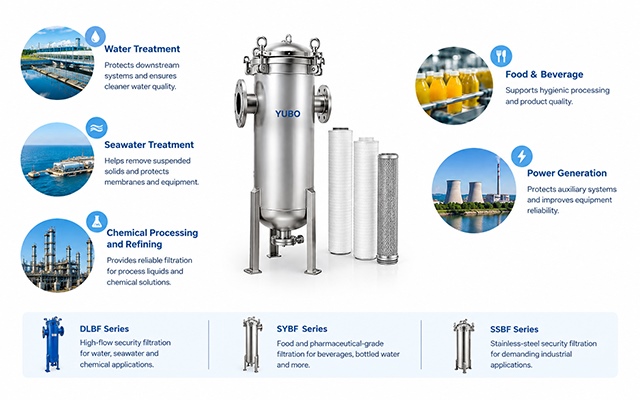
YUBO manufactures industrial filtration equipment and provides customized filter housing configurations according to project requirements.
Customization can cover housing dimensions, material options, filter arrangements, pipeline connections and sealing components, depending on the application.
To discuss a custom housing, send us the process fluid, required flow rate, operating conditions and preferred configuration. Existing equipment drawings, photographs or filter element specifications are also helpful, especially for replacement projects.
Our team can review the available information and clarify the details we need to confirm before quoting and production.