






Bag Filter or Security Filter: Choosing the Right Filtration Stage
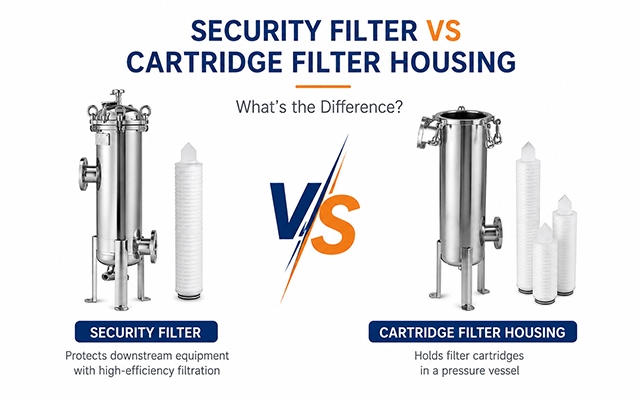
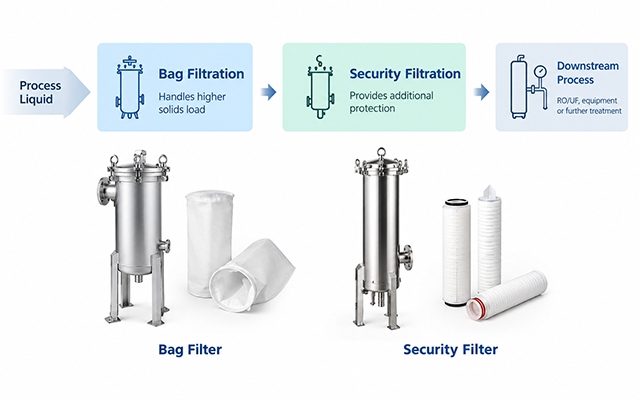
In an industrial filtration system, a bag filter and a security filter can serve different stages: a bag filter can handle a higher solids load, while a security filter provides additional protection before sensitive downstream equipment.
The right choice depends on what enters the filtration stage and what needs protection afterward.
A typical arrangement is:
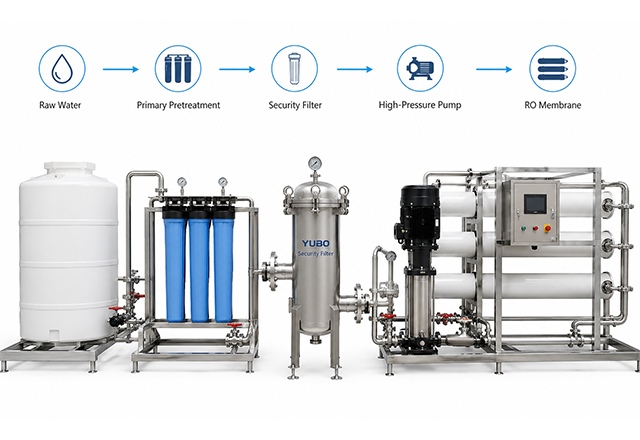
Process Liquid → Primary Filtration → Security Filtration → Downstream Process
Start With the Filtration Stage, Not the Filter Name
Before selecting equipment, look at the condition of the liquid at that point in the process.
If the liquid contains a relatively high amount of suspended solids, the filtration stage needs to deal with that solids load efficiently.
If most of the larger solids have already been removed, the next priority may be controlling the remaining particles before they reach a sensitive downstream process.
This leads to a simple distinction:
• Higher solids load: primary or intermediate filtration
• Residual particles: security filtration
• Sensitive downstream equipment: additional particle protection
The nominal micron rating alone does not determine which stage is appropriate.
When Is Bag Filtration More Suitable?
Consider bag filtration when the main requirement is to remove a relatively high solids load from the process liquid.
For example, where upstream liquid contains significant suspended solids, using a primary filtration stage before finer filtration can reduce the particle burden reaching downstream equipment.
The key question is:
Does this filtration stage need to handle the main solids load, or mainly protect the next stage?
If it needs to handle the main solids load, bag filtration may be the more suitable role.
This does not mean every system requires a bag filter. The choice depends on the actual liquid condition and process requirements.
When Is Security Filtration More Suitable?
A security filter is typically used when the process requires additional particle control before downstream equipment or treatment.
It can be particularly relevant when the next stage involves:
• RO or UF membranes
• Pumps and valves
• Process equipment
• Further treatment
• Applications requiring tighter particle control
In this position, the security filter is not expected to carry the entire solids burden of the incoming liquid. Its value comes from providing an additional filtration barrier before the next process stage.
Therefore, if a security filter is loading much faster than expected, the first question should be whether too much solids-removal duty has been pushed onto the final filtration stage.
Learn more about → Industrial Security Filter: Types, Applications, and How It Works
Bag Filter or Security Filter: Which Stage Fits?
For a quick process review, use this decision path:
1. Is the incoming liquid carrying a significant solids load?
If yes, consider a primary or intermediate filtration stage capable of handling that load.
2. Has upstream filtration already removed most of the solids?
If yes, determine whether additional particle protection is required downstream.
3. Is the next process sensitive to residual particles?
If yes, a security filtration stage may be appropriate before that equipment or treatment process.
4. Is one stage expected to do both jobs?
If the system has both a high solids load and strict downstream particle requirements, separating the two duties can be more practical than asking one filter to perform both.
Can Bag Filtration and Security Filtration Be Used Together?
Yes. The two stages can complement each other.
A common process arrangement is:
Higher Solids Load → Bag Filter → Security Filter → RO/UF or Process Equipment
Here, the upstream stage handles the larger solids burden, while the security filter provides additional protection before the downstream process.
This staged approach can be considered when:
• Incoming liquid has a higher suspended-solids load
• Downstream equipment requires additional particle protection
• A single filtration stage cannot efficiently handle both requirements
• Reducing solids loading on the final protective stage is important
However, using both filters is not automatically necessary. If the incoming liquid is already relatively clean, a separate bag filtration stage may not be required.
The objective is to give each filtration stage a clear job.
YUBO Security Filter Solutions
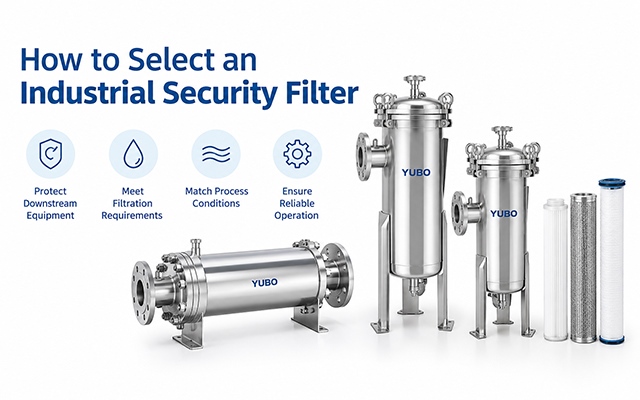
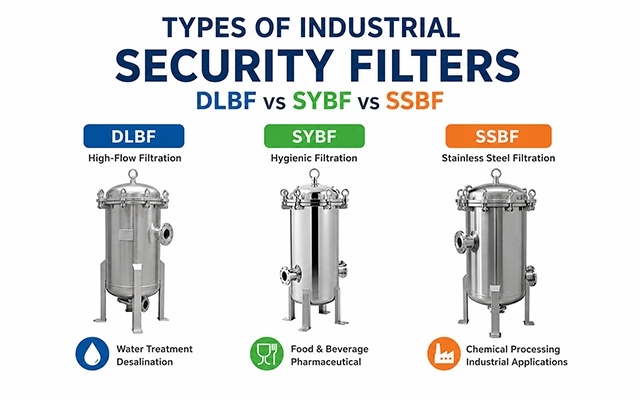
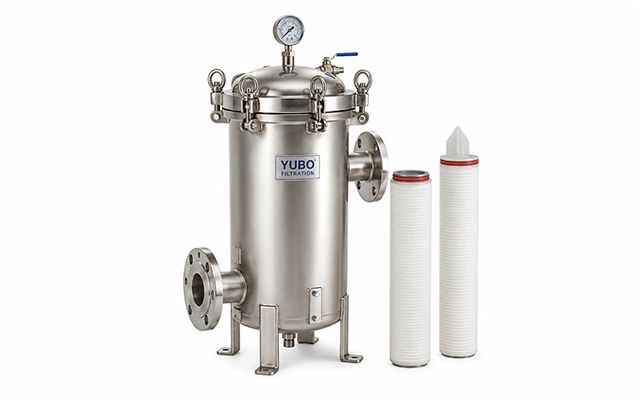
YUBO manufactures industrial security filtration equipment for different flow and application requirements. The current range includes DLBF, SYBF and SSBF series.
1. DLBF: high-flow security filtration for applications including wastewater treatment, cooling-water reuse, seawater desalination, chemical solution preparation and high-purity water.
2. SYBF: food- and pharmaceutical-grade security filtration for applications such as APIs, WFI, beverages, and drinking water.
3. SSBF: stainless-steel security filtration for applications including seawater treatment, condensate reuse, chemical processing, and high-purity water.
YUBO provides both standard and customized filtration equipment. Its engineering validation process includes pressure testing, flow distribution testing, material qualification, durability evaluation and safety validation.
For project-specific requirements, the filtration stage and equipment configuration should be determined from the fluid condition, solids load, required filtration performance and downstream process requirements.
FAQ
1. Can a bag filter replace a security filter?
Not necessarily. They can perform different filtration duties. Bag filtration may be used for higher solids loading, while security filtration provides additional downstream particle protection.
2. Should a bag filter be installed before a security filter?
When the incoming liquid carries a significant solids load, this staged arrangement can help separate bulk solids removal from downstream protective filtration.
3. Does every system need both?
No. The required filtration stages depend on the incoming liquid and downstream process requirements. Some systems need one stage; others benefit from staged filtration.